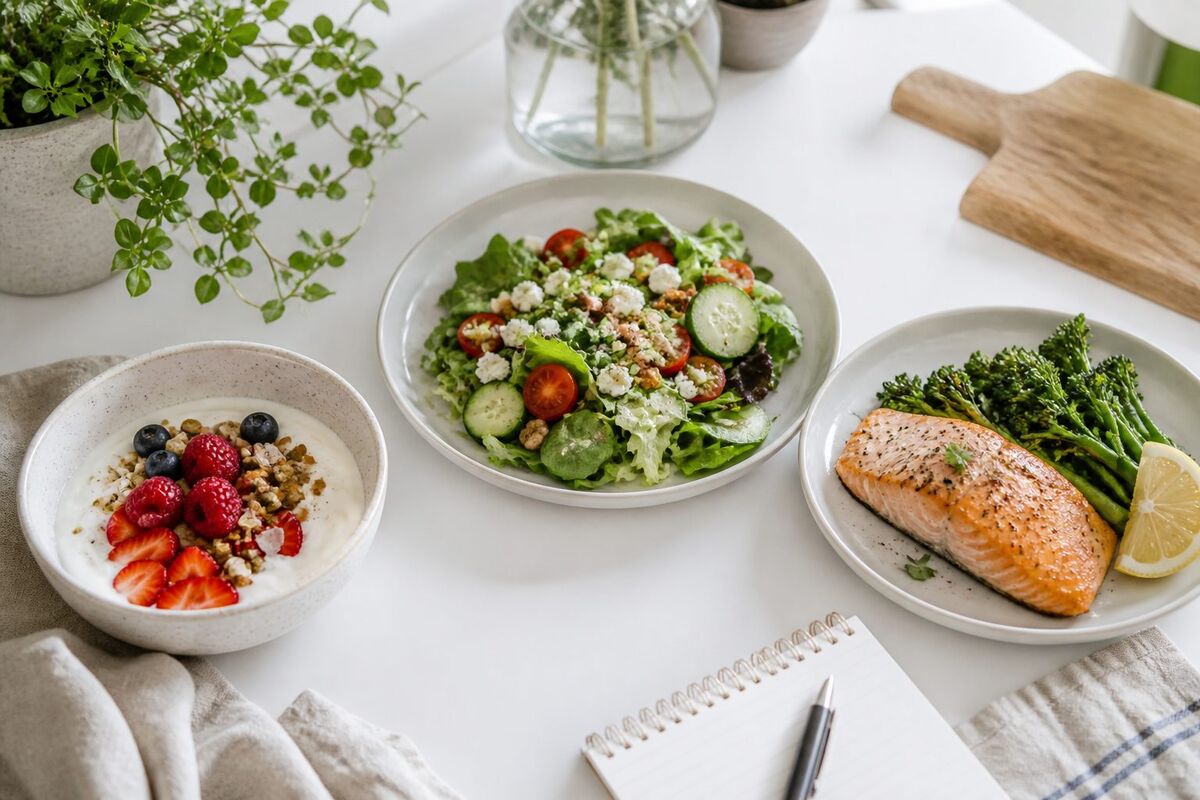
Plan the week you have, not an ideal week
Meal planning often fails because every night is treated the same. A late workday, sport practice, visitors, or a quiet weekend each asks for a different level of effort.
Look at the calendar before choosing food. Mark nights that need a quick meal, nights suited to leftovers or takeaway, and any day when cooking can be slower. The empty spaces are useful information, not a failure to plan.
Choose a few anchor meals first
Start with the meals that shape the rest of the shop. These are usually dinners with several ingredients, meals that create leftovers, or recipes that need fresh produce used early in the week.
Three to five dinner anchors are enough for many households. Fill breakfast, lunch, and snacks only to the level that helps you. Repeating a reliable breakfast can be more useful than planning seven different ones.
- Put highly perishable ingredients earlier in the week
- Place longer recipes on days with enough time
- Use a larger serve when leftovers can cover lunch
- Leave a flexible slot for plans that may change
Balance variety with effort
Variety does not require a completely different cuisine and cooking method every night. It can come from alternating proteins, vegetables, textures, and cooking time.
Use effort tags to avoid stacking several demanding recipes together. A slow Sunday meal can sit beside quick weekday dinners. Recently cooked history can also prevent the plan from repeating the same favourite too soon.
Adjust serves before creating the shopping list
Recipe serving sizes are often different from the number of people eating. Change the planned serves before ingredients are consolidated so the list reflects the actual week.
Think about intentional leftovers. Doubling a dinner may replace a separate lunch plan, but it should also increase the quantities and estimated cost in the list.
Generate one list, then review it
A generated list is a starting point. Check the pantry, freezer, herbs, oils, and spices before shopping. Consolidated quantities may also need a practical decision based on pack sizes.
Add household items that are not linked to a recipe and group the list in the order you move through the shop. A short review at home is easier than solving every issue in an aisle.
Use smart generation as a draft
A generator can reduce the blank-page feeling by matching recipes in your library to diet, effort, variety, recency, and budget preferences.
The result should remain a draft. Review each slot, swap what does not suit the week, and accept only the plan you want. If the library cannot fill a preference, an empty slot is more honest than an invented recipe.
If this is your first week of planning
Everything above assumes a recipe library with enough range to fill several slots. If you are only starting out, or the whole idea of a weekly plan feels heavier than it should, a smaller starting method works better than trying all of this at once.
Choosing three dinner anchors and leaving the rest of the week loose is a reasonable first attempt on its own, without needing a full library, tags, or a generator yet. Build the rest of this system once that habit feels easy.
Common questions
Keep the limits clear
Do I need to plan every meal?
No. Plan the parts that reduce friction. Many households benefit from dinner anchors and a few lunch or breakfast defaults rather than filling every slot.
How many recipes do I need before smart generation helps?
A varied set of recipes across the meal types you want to fill gives better options. If the collection is small, Kyura can identify the gaps rather than inventing meals.
Should leftovers be entered as a recipe?
They can be a free-text meal slot. Increase the serving size of the source recipe when the shopping quantities need to cover those leftovers.